
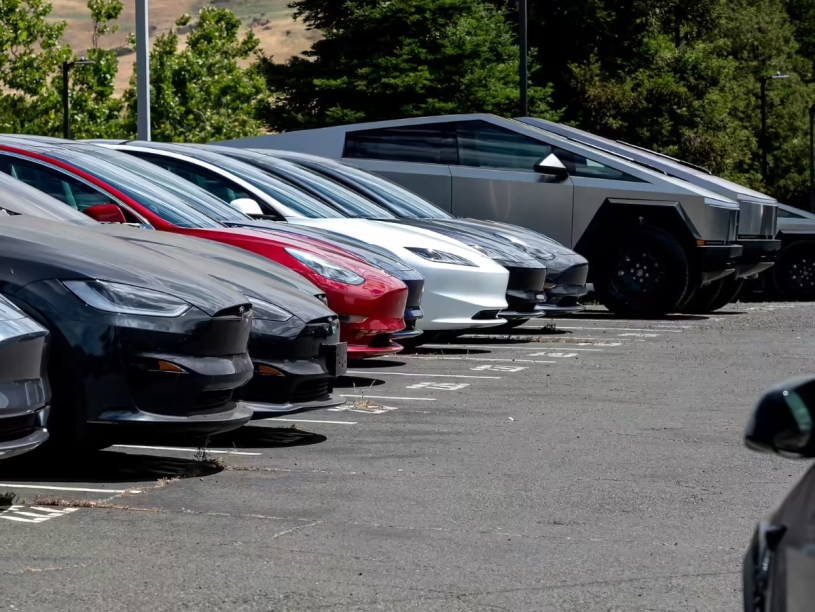
The automobile has long been more than a means of transport—it is an emblem of innovation, independence, and identity. From the sputtering motor cars of the early 20th century to today’s sleek, software-defined machines, autos have continually evolved in step with our ambitions, our culture, and our technology. In recent years, the automotive world has found itself at the cusp of unprecedented transformation—pushed by environmental urgency, enabled by AI, and redefined by a new generation of consumers. This article delves into the intricate world of autos, exploring their journey, their present realities, and their extraordinary future.
The Evolution of the Automobile: From Steam to Silicon
When Karl Benz introduced the Motorwagen in 1886, few could have imagined the cultural and economic behemoth that the automobile would become. Initially a mechanical curiosity, it evolved rapidly in the 20th century, bolstered by breakthroughs in manufacturing and engineering.
Milestones of Innovation
-
1908: Ford’s Model T – Often hailed as the car that put the world on wheels, the Model T introduced the moving assembly line, dramatically reducing production costs and making autos accessible to the masses.
-
1950s–60s: The Golden Age – Cars became symbols of style and prosperity. Tailfins, chrome, and horsepower were the hallmarks of this era.
-
1970s–80s: Safety and Efficiency – Catalytic converters, airbags, and fuel efficiency became more prominent as global fuel crises and safety concerns shaped design priorities.
-
2000s–Present: Smart and Sustainable – Hybrids, electric vehicles (EVs), and now autonomous systems are redefining what an automobile can be.
Each era left its imprint not just on roads, but on the culture—reflected in music, film, literature, and everyday life.
The Modern Automobile: More Than a Machine
Today’s car is no longer simply a combination of gears and pistons. It’s a rolling computer, a personal sanctuary, and increasingly, a statement about values.
Design Meets Technology
The aesthetics of modern vehicles remain a powerful draw, yet they are now deeply interwoven with functionality and innovation. Aerodynamics, once the domain of racecars, has become central to even family SUVs. Lightweight materials like carbon fiber and aluminum are standard in many models, not only for performance but for energy efficiency.
Infotainment systems, digital dashboards, over-the-air software updates, and voice assistants now shape the driving experience more than ever. A Tesla Model S or a Lucid Air, for instance, offers not only jaw-dropping acceleration but a user interface reminiscent of high-end smartphones.
A Shift Toward Electrification
The internal combustion engine, long the beating heart of automotive engineering, is slowly ceding ground to electric drivetrains. Driven by environmental regulations, consumer demand, and technological feasibility, EVs are no longer fringe experiments.
Key Benefits of EVs:
-
Zero Tailpipe Emissions – Reducing urban air pollution and global carbon output.
-
Lower Operating Costs – With fewer moving parts, EVs often require less maintenance.
-
Instant Torque – Resulting in exhilarating acceleration even from modest models.
With governments offering incentives and cities planning bans on fossil-fueled vehicles, the electric transition seems less a question of “if” and more “how soon.”
The Auto as Experience: How Consumer Expectations Are Reshaping the Industry
Modern consumers expect their vehicles to do more than move—they must connect, entertain, protect, and sometimes even drive themselves.
Autonomous Driving and AI Integration
Self-driving technology, while still maturing, represents one of the most transformative forces in the industry. Companies like Waymo, Tesla, and Mercedes-Benz are pouring billions into developing Level 4 and 5 autonomy.
Though regulatory and ethical hurdles remain, the foundation is set:
-
Advanced driver-assistance systems (ADAS) are now commonplace.
-
AI-based perception allows for real-time environmental recognition.
-
Redundant safety systems ensure that even partially autonomous cars are vastly safer than their predecessors.
The idea that a car could become a mobile living room—where the steering wheel is optional—is no longer science fiction but a fast-approaching reality.
Connectivity and Personalization
We are entering the era of the connected car—where vehicles are integrated into digital ecosystems as seamlessly as smartphones.
Some notable trends include:
-
Vehicle-to-everything (V2X) communication, enabling cars to talk to infrastructure, pedestrians, and other vehicles.
-
Cloud-based user profiles, allowing drivers to carry their settings, playlists, and preferences across vehicles.
-
Subscription services, turning features like heated seats or performance boosts into on-demand upgrades.
Sustainability Beyond the Tailpipe
While electric vehicles help reduce emissions during operation, the auto industry is increasingly focused on sustainability across the entire lifecycle.
Greener Manufacturing
Major manufacturers are investing in renewable energy for their factories, using recycled or plant-based materials in interiors, and adopting circular economy principles.
For instance:
-
BMW’s iVision Circular concept aims for 100% recyclability.
-
Volvo has pledged to go fully electric and carbon neutral by 2040.
These shifts reflect not only environmental consciousness but a deeper acknowledgment of the auto’s role in the broader ecological narrative.
The Road Ahead: Challenges and Possibilities
Despite its promising trajectory, the auto industry faces significant challenges—ranging from raw material shortages to global supply chain disruptions and geopolitical instability. The push toward electrification, for example, hinges on access to lithium, cobalt, and rare earth metals—many of which are concentrated in politically sensitive regions.
Moreover, the tension between personal mobility and public good—seen in debates about traffic congestion, urban planning, and shared transit—demands nuanced solutions.
Yet, the potential is vast. Cars may soon be powered not just by batteries, but by hydrogen. They may repair themselves, learn your habits, or even function as part of a decentralized energy grid.
Final Thoughts: The Car as Cultural Mirror
Ultimately, the automobile has always been a mirror—reflecting the priorities, dreams, and anxieties of its time. In the roaring 1920s, it symbolized freedom; in the post-war boom, prosperity; in the 21st century, innovation and responsibility.
As we steer into an era of electrification, autonomy, and intelligent systems, the question is no longer simply what we drive—but what we value. The auto, in all its forms, remains a central thread in the fabric of modern life—engineered not just for movement, but for meaning.
 247 Global News Blog